Achieve remission in ten weeks1
Private practice clinics using Flow
Number of Flow users worldwide2
introduction
Provide your patients with an effective1 and easy-to-use, at-home depression treatment option. Flow has a favourable side effect profile1,2 and can be used as a standalone intervention or in combination with other treatment approaches including medication.
Retrospective data from 13,683 ex-US real-world users3 indicates that adherent individuals achieved early clinical improvements, with a positive shift in severity levels observed by Week 3 across all baseline cohorts*.
Flow can have an enhanced effect when supplemented with an antidepressant1, as seen in the EMPOWER clinical trial .
No serious adverse events in pivotal trial1

Flow is designed to optimise outcomes for both patients and clinicians by offering tailored solutions for each.
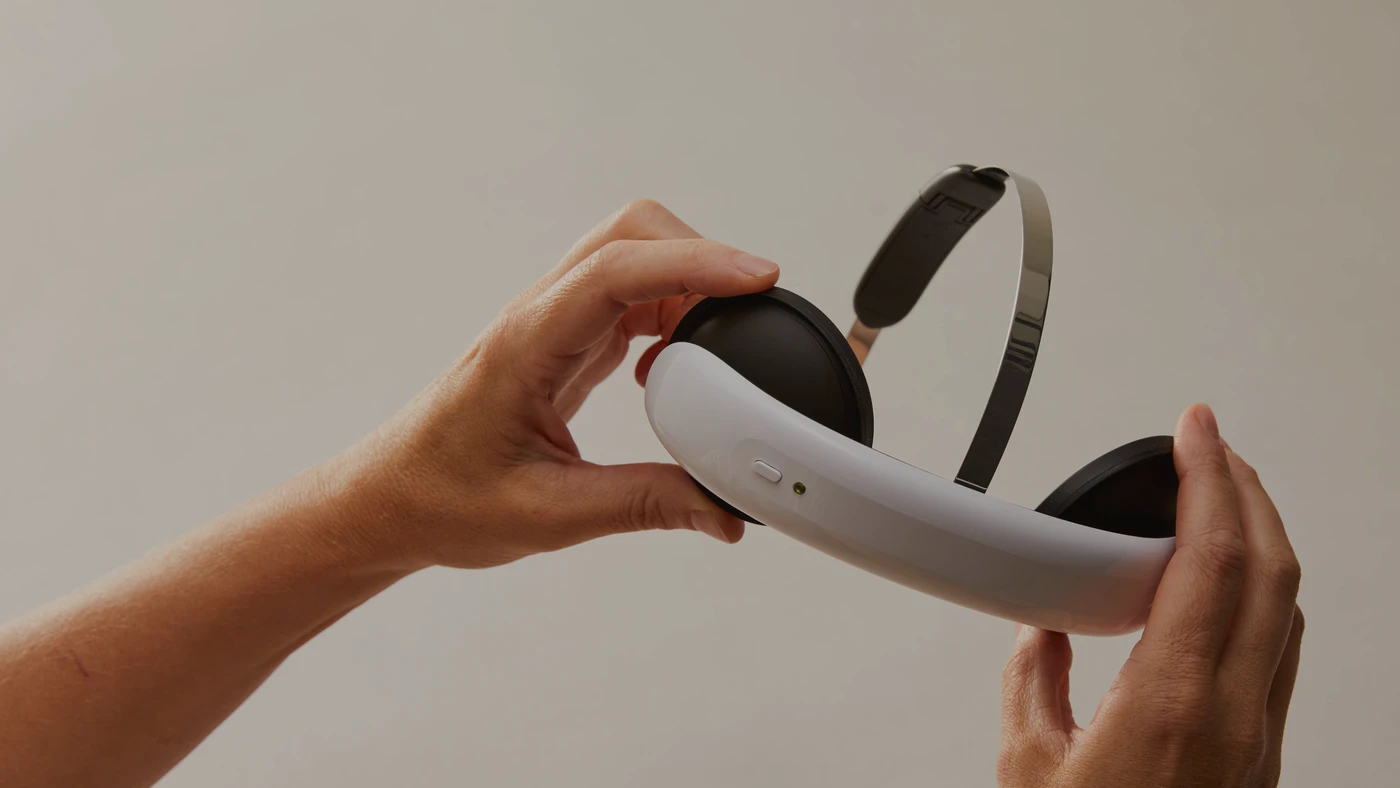
Patients are equipped with the Flow tDCS Headset and companion app, allowing them to conveniently manage their treatment from home. Clinicians benefit from a remote monitoring platform that provides real-time insights into patient adherence, outcomes, and supports data-driven care decisions.
Clinicians can adjust and customise patient stimulation schedules according to clinical need*.
*Subject to clinical qualifications and training

The EMPOWER clinical trial results, published in Nature Medicine, demonstrate Flow is effective and superior to the sham treatment1.
This 10-week double-blind placebo-controlled randomised study reviewed the use of Flow compared to placebo across 173 adult participants diagnosed with unipolar depression (moderate to severe). Real-world data2 and various ongoing pilots3 show similar results.
The EMPOWER trial also highlighted a potential amplification when Flow was used in combination with an antidepressant. This impact has also been reported in real-world cases.
*Remission defined as a score of ≤12 on MADRS

Depression treatment does not need to be a compromise. Longitudinal studies of tDCS report no major adverse events4. In the EMPOWER trial, there was increased reports in the active group of skin reddness, skin irritation, and trouble concentrating. Real-world evidence supports the favourable safety profile, with the most common side effects reported being skin reactions and headaches2.

Flow is approved for use in anyone 18 or older with a Major Depressive Disorder diagnosis.
Flow has been provided to patients across Primary Care, Perinatal Services, Crisis Services and Community Mental Health settings.
Meet our products
Flow and the Clinician Platform
At Flow Neuroscience, we are committed to broadening access to clinically effective mental health treatments, empowering clinicians to offer innovative care options for their patients: Flow and the Clinician Platform.

Flow
Advanced tDCS neurostimulation device designed for depression treatment with precise, safe electrical stimulation monitored by a comprehensive mobile application that guides treatment sessions.

Clinician Platform
Professional monitoring platform for healthcare providers to track patient progress and adherence, and adjust treatment protocols with Real-time monitoring, Patient dashboard and Clinical insights.
What clinicians say
"Having used Flow with several patients over the past few months, I am very impressed with having this as an option to offer, with the responses I am seeing, and how patient-friendly the treatment/technology is.
I think this is a real breakthrough moment in a speciality where so many of our medications can cause significant side effects, and therapy is not a 'quick fix'."

"We are seeing rapid improvements in patients who have been struggling with severe depressive symptoms for many years, and it is allowing us to treat more patients at home in a far better environment to promote recovery in their mental health journey."

"I use Flow with my clients who are stuck. Flow enables them to move forward and out of the loop of helplessness. They open up and see things they couldn't before. When they open up, they are more engaged in therapy. "

"Flow has received overwhelmingly positive feedback from our patients, who have reported improvements in their emotional well-being, increased energy levels, and overall functioning. Patients experience minimal discomfort or side effects during its use. Some patients have come off their antidepressants as a result of using Flow."

"The Flow application is easy to use as is the headset, the treatment can be conducted from home and patients find this a very useful treatment…
The use of neuromodulation techniques such as tDCS and TMS provide an alternative and effective treatment for that group of patients who are very difficult to manage with medication."

"Flow's exciting and encouraging data raise the prospect of a real advance in the treatment of depression...a helpful intervention for many people suffering from major depression."

"Having been used to offering rTMS to patients as a last resort, it is very liberating to be able to offer Flow as one of several initial treatment choices. Patients find it very easy to use and I love the fact that I can monitor their use using a validated scale Regarding the Flow RCT: These results are really exciting and support the clinical experience I have gained with Flow. Flow is hugely popular with patients and many are happy to use it when given the choice between it and another antidepressant."

Certified in the UK, EU
Switzerland, Norway, Hong Kong, Brazil and Australia

Pilots in 5 NHS Trusts and NHS Practitioner Health

Approved by the British Standards Institutions (BSI)

Class IIa medical device CE-marked

Tested according to IEC 60601 for electrical medical device safety
Everything you need to succeed with Flow
Neuromodulation is an emerging field for many clinicians.
To ensure you are fully supported, we provide complimentary training, ongoing clinical support, and a demo device, allowing you to evaluate Flow firsthand.

References: 1. Woodham, R.D., Selvaraj, S., Lajmi, N. et al. Nat Med (2024). 2. Data on file. Flow Neuroscience Real-world reports. 2025. 3. Mu M., et al. J Affect Disord Reports. (2026)
*Following Week 3, the majority of users transitioned to a maintenance frequency of two sessions per week. While the recommended treatment duration is 10 weeks, clinical observation shows many users continue treatment beyond this window.